
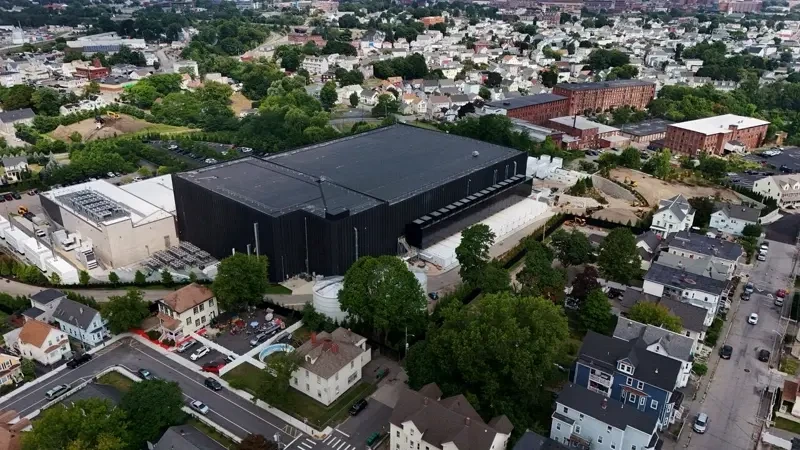
A report by the financial website “MoneyWise” on the 14th indicates that, contrary to the beliefs of some sellers, the arrival of data centers does not affect local housing prices. Lori, a 64-year-old resident of North Carolina, says her home has remained unsold for four months—a situation she attributes to a data center currently under construction behind her property. She notes that potential buyers lose interest the moment they see the facility.
A recent study by the real estate platform Realtor.com concludes that data centers have no impact on nearby home prices. The research analyzed housing price trends within the same neighborhoods across four specific timeframes: the year before a data center opened, the year it opened, and the one- and two-year periods following its opening.
Nevertheless, Lori reports that even after four months on the market—and a price reduction from $925,000 to $799,000—her home remains unsold.
In an interview with the financial news site “MarketWatch,” Lori asked, “How low do I have to drop the price to get it sold? How do I know when I should just accept whatever offer comes along and cut my losses?”
While data centers have existed for decades, they have experienced explosive growth in recent years, serving as the essential infrastructure for artificial intelligence (AI) models.
According to Realtor.com, large data centers were present in only 12 U.S. ZIP codes in 2015; by 2026, that number is projected to reach 125.
Meanwhile, the proportion of homes for sale near large data centers has more than doubled. These facilities are increasingly expanding into remote, rural towns, far removed from urban centers. Residents who never imagined they would end up living next to a data center now find themselves with an entirely new—and, according to a Gallup poll, generally unwelcome—neighbor. According to an analysis by MoneyWise, there is currently no evidence that the construction of a data center in one’s neighborhood will inevitably lead to a decline in property values. However, residents should be prepared for certain changes—the most immediate impact of which may be reflected in their electricity bills.
In the state of Virginia, for instance—where data centers are highly concentrated—electricity prices have surged by nearly 270% over the past five years.
Beyond the construction noise during the building phase, local residents may also have to contend with persistent noise pollution generated by the data center’s ongoing operations. Furthermore, these facilities can negatively affect the local environment; they are extremely water-intensive, consuming as much as 5 million gallons of water per day.